
Welcome back to Wildlife Wednesdays Brilliant Explorers!
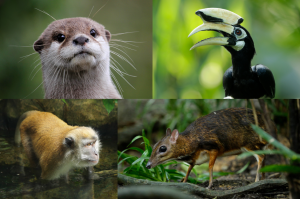
On today’s topic, we will be taking a trip to the jungles of Singapore to explore the extraordinary and rare wildlife that are native to Singapore. Apart from the concrete jungle, Singapore is home to diverse jungles and remote islands that are filled with some beautiful and bizarre critters.
The Sunda Colugo
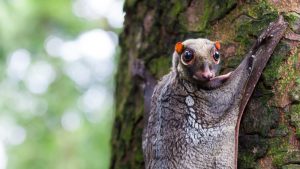
This elusive animal goes by several names, the Sunda Colugo or Sunda Flying Lemur; it is also known as the Malayan Colugo or Malayan Flying Lemur. Unlike its name, the Colugo is not a species of lemur nor can it fly; it actually falls with style, gliding from tree to tree.
They’re closely related to primates, just like our furry friend, the slow loris. The Colugo is an animal that spends most of its time in the trees and is nocturnal, which means its active at nights while spending all day sleeping. The large flaps of extra skin between their legs help a Colugo glide, similar to that of a parachute. With a built-in parachute, colugos can take big leaps from one tree to another. A colugo is an elusive animal, and their camouflaged fur pattern make them even harder to spot, allowing them to blend in with trees and their surroundings.

The Oriental Pied Hornbill
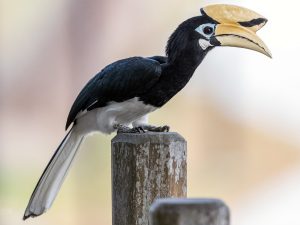
Also known as the Malaysian Pied Hornbill or Sunda Pied Hornbill. Hornbills get their name from their horn-like feature, which is actually called a casque. Their diet consists of fruits, insects, small birds, small reptiles, and they’ll even go hunting for fish or shellfish. Part of the bird family, they have stunning curved beaks and are covered in feathers. The call that an Oriental Pied Hornbill makes is unique to its species when compared with other Hornbills, the sounds they make can be described as high-pitched cackles.
Dugongs
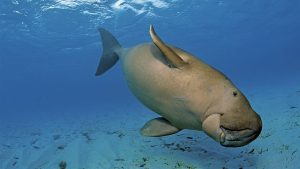
These graceful, gentle giants can be found in the waters that surround the islands of Singapore. Also known as sea cows because of how they graze on seagrass and their large size, which resembles a cow. Believed to be ‘mermaids of the sea’ in folktales because of their tails, and sometimes, seaweed tends to get stuck on their heads that look like hair. Dugongs are mammals that live in the ocean, just like whales and dolphins; they come up to the surface to breathe in air and dive back into the waters.
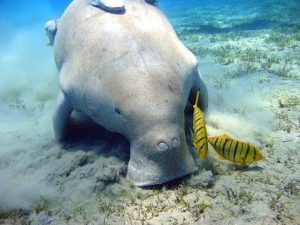
They are herbivores and are dependent on seagrass, the snout of a dugong is down-turned, which helps them graze the seabed easily. Dugongs are vulnerable to extinction, so seeing one of these gentle giants in the wild is rare, but if you happen to come across one, cherish the incredible encounter.
The Sunda Pangolin
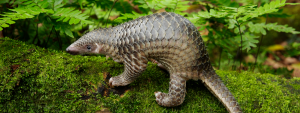
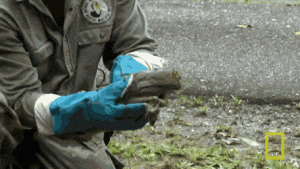
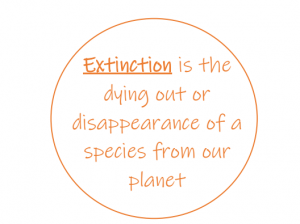
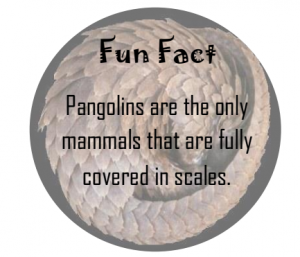
Found throughout Southeast Asia, the Sunda Pangolin is on the brink of extinction; they are critically endangered. The Sunda Pangolin is covered with rows of thick scales, just like a reptile but pangolins are not reptiles, they’re mammals. They have powerful claws to help them dig into the ground and tree bark to find termites or ants.
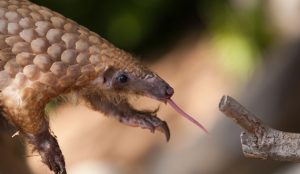
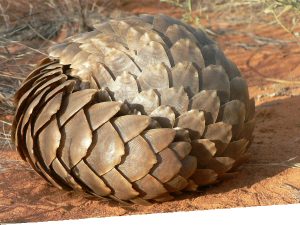
Pangolins do not have any teeth; they instead have long sticky tongues that picks up ants or termites when foraging inside a termite mound or an ant nest. They also have very bad eyesight, but they have a terrific sense of smell; their fantastic sense of smell helps them pick up on the scent of termites and ants that lie deep within the ground. When in danger, a pangolin will curl into a tight ball, exposing its hard scales.
Raffles’ Banded Langur
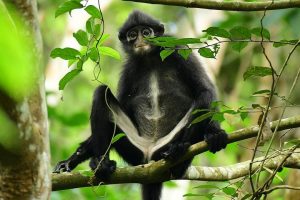
Also known as the Banded Leaf Monkey, this primate is unique to Singapore and Southern Peninsular Malaysia. The Raffles’ Banded Langur is diurnal and arboreal, spending most of its time in the up above in the trees.
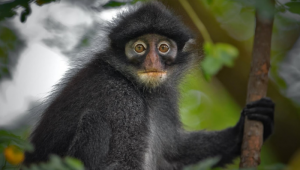
They are covered in grayish-black fur with white markings on the chest and inner thigh, getting its ‘banded’ name from the white mask-like marking on its face. These primates have specialized bacteria in their gut, the bacteria breaks down and digests leaves and unripe fruits.
Green Crested Lizard
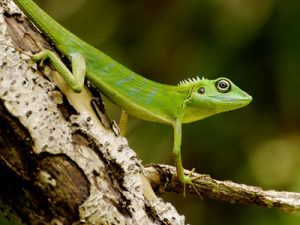
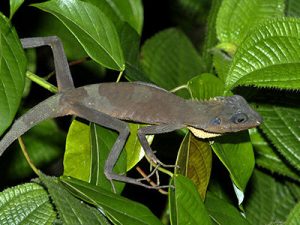
These bright green lizards are of the reptile family and can only be found within Southeast Asia. Like a Chameleon, these little critters can change their skin color; when threatened, they will turn from green to brown, which will confuse predators and help them blend into their surroundings. They also have a unique marking around their eyes, a dark brown or black ring.
Dolphins
The Indo-Pacific Humpbacked Dolphin and the Indo-Pacific Bottlenose Dolphin are common species that can be found in the waters surrounding Singapore.
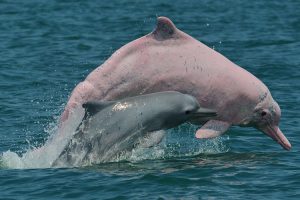
Indo-Pacific Humpbacked Dolphins are pinkish-gray in color, and if you look closely at these dolphins, you’ll see that they have a hump under their dorsal fin, which is how they got their name.
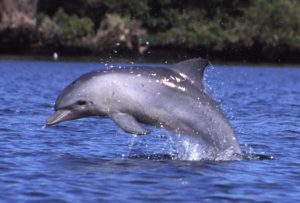
Indo-Pacific Bottlenose Dolphins are dark gray in color and have a light gray belly; they get their name ‘bottlenose’ because of their short bottle-like snouts. These friendly, playful mammals feed on a variety of fish and other small sea creatures like squid.
Which of these animals have you come across? Try and spot them on your next jungle trekking or island-hopping adventures in Singapore. Remember Brilliant Explorers, these animals are wild and can be dangerous; keep a safe distance and admire these magnificent animals from afar. As Brilliant Explorers, let’s do our parts to keep our wildlife safe by reporting any illegal wildlife trade to WWF.